Last Day of the Trek: A Sense of Accomplishment, and a Little Advice for Those About to Trek
This article was translated from Japanese. Read the original
I hadn’t drunk water after drinking alcohol, so I woke up with a parched throat.
It was still raining outside, and I was a little disappointed that the first day had been the only day with clear weather.
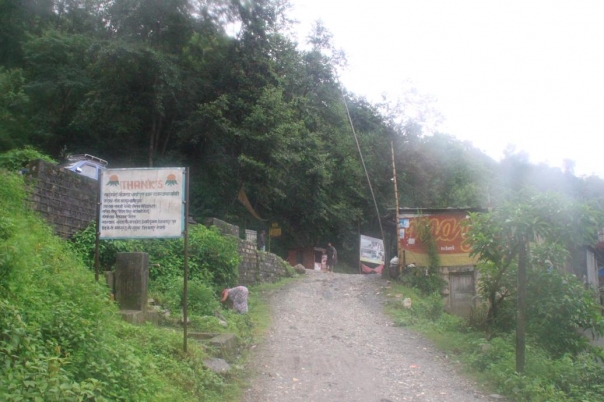
I set out around 9, and about three hours later reached Nayapool, the entrance where the trek had started.
The moment I got on the bus, I realized the five-day trek was over.
It was hard, but I’m glad I went. That’s my honest impression.
I didn’t get to see the scenery I’d hoped for, and there were many disappointments, but being able to face myself slowly during the trek was a very meaningful time.
I had a bit of a fight with my guide on the last day, but thanks to speaking English for five days, my English improved a little. Thank you.
Finally, I’d like to write a little for anyone interested in trekking in Nepal.
・It’s better not to go through an agency.
Agencies take about 20 to 30%. If you pay $500, the agency keeps $100 to $150. Harish, who actually guided me, said that without the agency’s fee he would guide me for five days for $400. Honestly, for a backpacker this is quite a lot. Next time I take a guide for a tour or the like, I’ll find the guide myself.
Incidentally, I’ll summarize this in another article, but airline comparison sites also take a service charge of about 3%. The comparison site that introduced me to Jet Airways, which I used to fly from Bangkok to Nepal, was one of them.
My recommendation is to use comparison sites to list cheap airlines, and then buy tickets directly from each airline. A round-the-world trip costs about 300,000 yen in airfare and other transportation. 3% of that is about 15,000 yen. If you can save that much with just a little extra effort, you should.
Especially for this trek, an agency alone would have taken about 10,000 yen. Of course, there are advantages to using an agency. They guarantee guide quality to some extent, and the chance of getting a terrible guide is not small. That’s exactly why I think guides themselves should be more proactive about self-branding through the web (their trekking portfolios, videos, references from travelers, and so on). (I thought, please do.)
・I recommend the dry season, but the rainy season isn’t bad either.
In the rainy season the ground conditions are bad and you may not see the mountain views, so I recommend the dry season. However, in the rainy season, I hear you can get a guide for about half the usual price, or even for free in exchange for dinner and breakfast. Also, in the dry season you often can’t stay at lodges without booking in advance, but in the rainy season there are few people so you can choose lodging freely. In addition, compared to the dry season, the greenery is beautiful and the mist looks enchanting, which are also good points.
I’ll add more if I remember anything else.