I Went to Tono, Iwate Prefecture, as an Information Volunteer
This article was translated from Japanese. Read the original
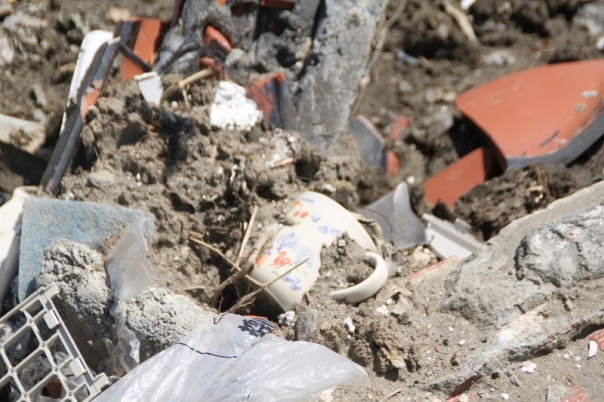
On March 11, I never imagined that the day would come to be given a name like the Great East Japan Earthquake. Naturally, I couldn’t believe the news and images I saw through Twitter and TV. Having now gone to the disaster area and seen the devastation with my own eyes, honestly I found myself wondering what on earth I had been looking at. Even looking back now, I can’t get that scene out of my head, and I still can’t believe it.
On May 14 and 15, for two days, I went to Tono, Iwate Prefecture, as an information volunteer. I haven’t managed to put it into my own words yet, but I’d like to write down what I thought there.
First, what is an information volunteer? It’s a program called “Nattemo Shirabetai” run by the NPO Jigyo Support Center, in which volunteers help people look things up at PC booths, assist with printing, and take requests. The purpose is also to communicate directly with disaster victims, build trust, learn what they truly need, and make use of that in the future. Teams are formed for each evacuation shelter and respond flexibly according to needs. *The content may change in the future.
I learned about this program from an RT on Twitter of a tweet by Mr. Kitada, vice representative of the All-Japan Student Network to Support Victims of the Great Disaster. I had already decided to join some kind of volunteer work from mid-May, and I thought my knowledge of PCs and such might be useful, so I decided to take part.
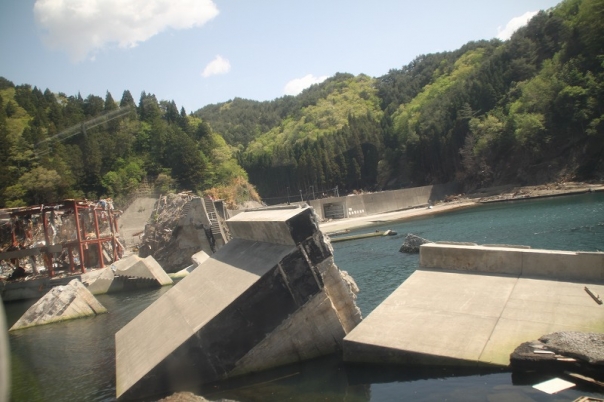
The seawall had been destroyed by the tsunami.
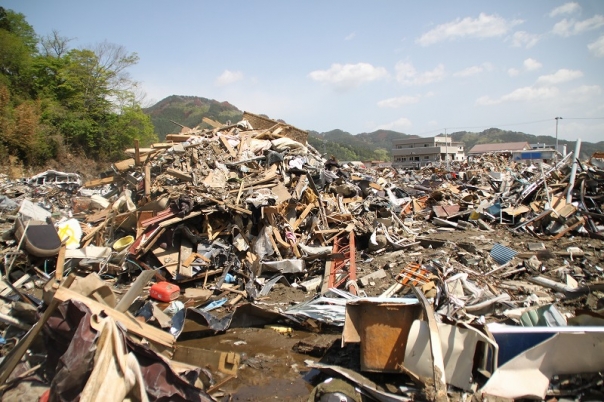
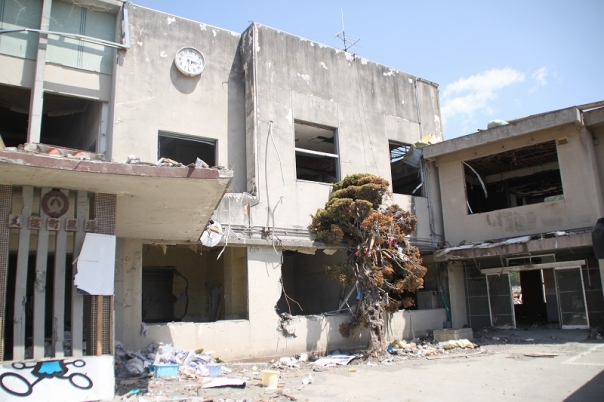
Town hall
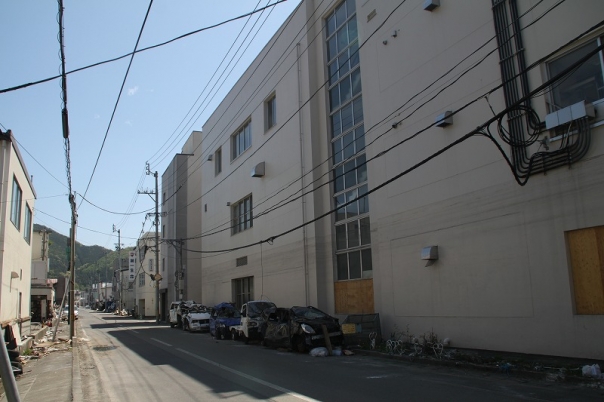
This is the scene that made me shudder most. Can you tell what the darkened mark on the wall is? It’s the trace of the tsunami’s flow. It’s easily four meters. More than seeing the ruins of collapsed buildings, this made the tsunami feel real.
Until now I only knew the condition of the disaster area and the shelters from information on the internet such as Twitter, and from TV. What I saw and felt through this information volunteering was nothing as mild as “confirming the information going around.” I still can’t believe the scenery of that disaster area and the tsunami damage. When I saw that sight, I felt there was nothing I could possibly do.
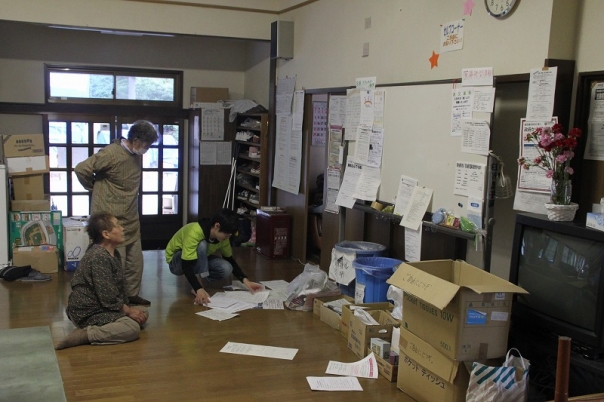
Organizing postings at a shelter
What I focused on most in this volunteering was operating information-sharing tools such as blogs and Twitter. I volunteered at a place called the Denshokan, which has a 400-year-old local performing art called Usuzawa Shishi Odori (lion dance), and they wanted “to let many people know about the Usuzawa lion dance” and “to spread the word,” so I helped with that.
If you have time, I’d love for you to take a look.
Blog→ http://denshoukan.blogspot.com
Twitter→ http://twitter.com/#!/usuzawashishi
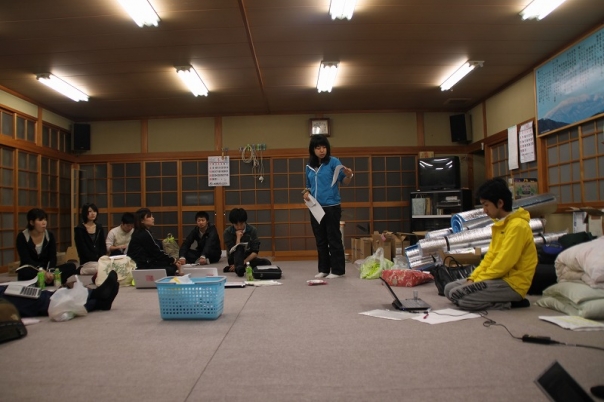
The end-of-day review meeting
The people who took part in this volunteering were all outstanding and many were a little unusual, and I was very inspired. They were all people I truly hope to stay connected with in some form and to meet again somewhere.
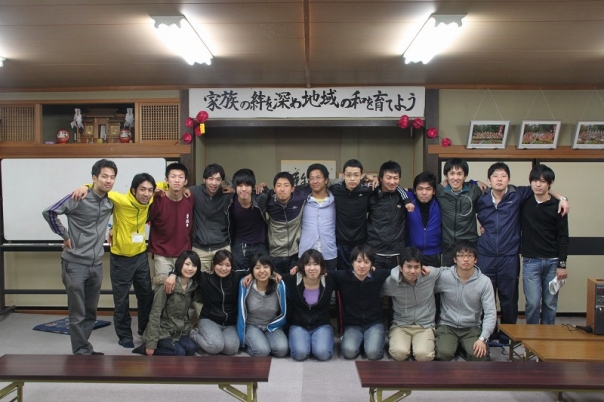
The participants of this information volunteering
What I felt strongly over the two days was the importance and difficulty of building trust. Until I joined this volunteering, even as I denied it in words, I unconsciously thought things like “it’s enough if I can put my knowledge to use” and “giving is what matters.” But more than that, I felt that communicating properly with the people in the disaster area and building trust is what matters above all, and that my own special skills are only a bonus.
The people in the disaster area were strong, and kind. If anything, I was the one who was encouraged. I learned far more than I contributed, and I am deeply grateful to have been allowed to take part. As long as I have time, I intend to keep taking part in reconstruction support and make use of this experience. And after reconstruction, I want to visit the Denshokan and drink sake, laughing, with Mr. Tobai, the leader of the shelter there. I can’t wait for that.
Finally, the future schedule of the information volunteering is undecided. When student help is needed again, I’d like to announce it on this blog and on Twitter. It is said that the disaster area will need reconstruction support for the next three years. If at all possible, I’d really like you to take part. You will absolutely not regret it. Even if it isn’t this volunteering, I want you to see the current state of Japan in some way.
From June 15, I’ll be traveling alone abroad for half a year, using Facebook. (I’ll write the specific plans soon.) As I travel around the world, I want to tell people around the world what I saw and felt with my own eyes this time.