If I Were to Do Business in Nepal, What Would I Do? Thinking It Through

This article was translated from Japanese. Read the original
This is the second one after Bangkok. This time it’s less a business and more a website.
Background information
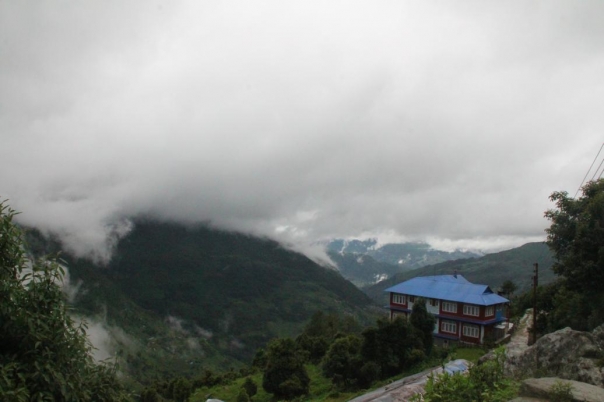
・Nepal’s greatest strength is trekking.
・In the rainy season, trekking customers number only about 5% to 10% of the dry season.
・Trekking agencies take about 20 to 30% as a referral fee.
・Guides are very dissatisfied with the fees, and much of their income comes from tips.
・Many people book trekking via the internet or travel agencies before coming to Nepal.
・Recently the internet has spread quite widely, and many people in Nepal use Facebook.
・When you use an agency, you don’t know what kind of guide you’ll get.
Hearing all this, I thought there should be a web platform that connects customers and guides directly.
I also thought of doing it by making use of Facebook.
《Site》 The website carries information on many guides, and customers can see more details about each guide on their Facebook pages or accounts and make requests directly through Facebook.
Guides would be encouraged to post their own trekking scenes, scenery, videos, and so on on their Facebook pages. There would also be check items such as age, hobbies, and areas of interest, making it easy to narrow down a search.
On each guide’s page on the site, references (ratings, impressions) from customers they have guided through the site can be posted. Rankings and the like would be assigned based on their number and ratings.
The fee guides pay to use the site is 5% of what the customer pays. Customers pay by credit card or PayPal before coming, and the amount minus that fee is transferred to the guide’s account.
For guides, guiding several people at once increases both time efficiency and income, so if requests come in during the same period, they could propose it directly to customers. Prices would be set uniformly by season, number of days, and location. If a guide falls ill and rests, the customer would be refunded. And if such absences or troubles continue, the guide’s listing on the site would be removed.
The reasons guides would pay the site a fee are that it makes it easy to attract customers, and that references from customers who used the site are reflected on the site. In other words, the more references a guide receives through the site, the more their own credibility rises and the more likely requests are to come. Guides can also call out directly to prospective trekkers through Facebook.
When I used a trekking company this time, I was very anxious about what kind of person my guide would be. If guides did their own self-branding, for example by having their own portfolios, I would check those first. For customers, too, going without an agency is cheaper, and you can know (choose) in advance who your guide will be.
Well, that’s what I jotted down all in a rush. It’s a bit hard to follow, so I’ll fix it when I have time. It’s full of holes, so I’d be glad if you poked at it in all sorts of ways.
Related article
・If I Were to Do Business in Bangkok, What Would I Do? Thinking It Through.