Meeting Naohiko Hirata of Tokyo Diamond's Thailand Branch
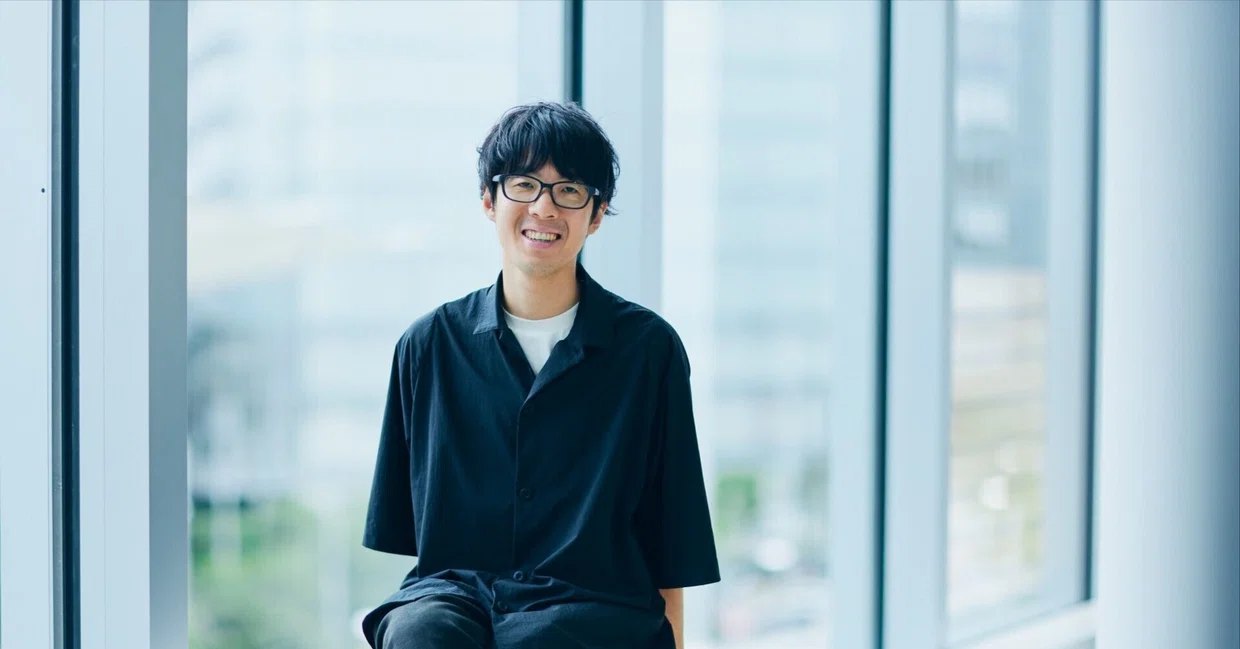
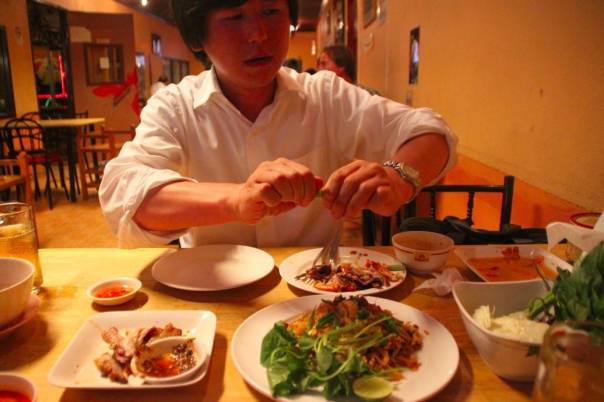
On the night of the day I met the Chulalongkorn University students in Thailand, I met Naohiko Hirata, who works at the Thailand branch of Tokyo Diamond.
We first met at a cherry blossom viewing party some time ago, kept in touch on Facebook, and he agreed to meet me. Maybe because we’d exchanged messages on Facebook several times, it didn’t feel like only the second time we’d met. It makes me realize all over again how amazing it is that you can build closeness regardless of physical distance.
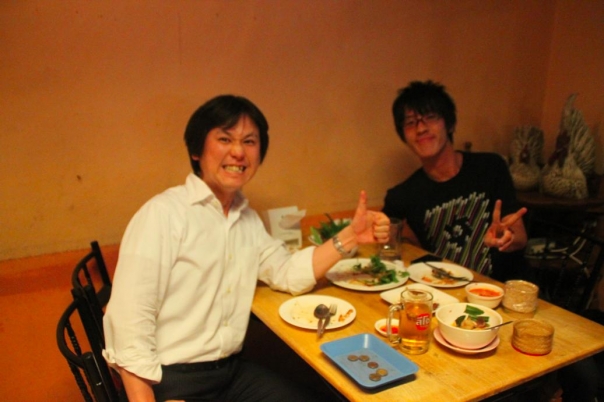
He took me to a Thai restaurant called Sabai Jai Gai Yang. It’s apparently quite famous, and it was packed with people even around 11 p.m. The Thai food was delicious.
The conversation with Mr. Hirata was fun and I learned so much. Here are the things that left the strongest impression on me.
・Salaries in Thailand
Starting salary for a university graduate is 20,000B/month, and for a factory worker 6,000B/month. A graduate’s starting salary is roughly one quarter to one third of Japan’s.
・On language skills
From now on, being able to work only in Japan, that is, not being able to use other languages, will be a major lost opportunity.
As is often said, Japan’s market will shrink further from here.
As borderlessness advances, being able to work only in Japan = not speaking other languages will translate directly into losing your job.
・Japan becoming a subcontractor to Chinese companies
Now that China has overtaken Japan in GDP, he said Japan will become a subcontractor to China within the next ten years.
If Japan can produce something of far higher quality for 1.2 to 1.5 times the cost of Chinese labor, then work will be sent to Japan, he said.
・Japanese companies haven’t pushed into India. They stop at Thailand.
He said India is already quite well prepared to accept Japanese businesses, but Japanese companies stop at Thailand.
・Markets and prices are rising rapidly.
Prices in Thailand, India, Vietnam and other Asian countries are rising rapidly. Markets are always on the move.
・What should Japanese people do from now on?
We need to feel a sense of crisis. The story of the frog in lukewarm water makes it easy to understand.
Some of this you may have heard before.
Some of it I had also heard from third parties or read online. But the words of someone actually working there left a stronger impression on me than any other information. It seems obvious once you say it, but there is a 50-fold difference in opportunity between doing business aimed at 120 million Japanese people and being able to do business with the remaining 6 billion-plus people in the world, isn’t there?
Among some students in Japan these days, there’s a sense that whether you’ve caught the wave of social media like Facebook and Twitter is what sets the pace of the times, but we should reaffirm the importance of language skills. What’s more, I felt that if you combine the world × language skills × social media well, there’s a potential beyond imagination.
I’m going to try putting a lot of this into practice on this journey.
If you like, please give me a support click. I’m aiming for the number one spot in the rankings.
I’m also taking on the project below. I’d appreciate your support.