July 2012
How a Town of 180,000 Became the Gourmet Capital of the World: The Miracle of San Sebastián, Spain
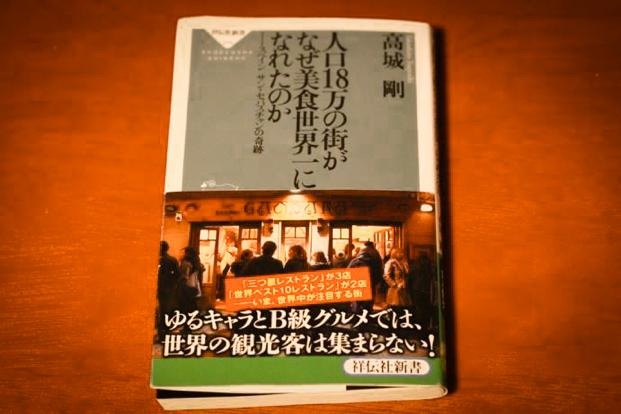
San Sebastián is a small town of 180,000 people in Spain’s Basque Country.
Today it is known as “the gourmet capital of the world,” drawing people
from all over the globe in search of delicious food.
It was once known as a high-end resort, but with no World Heritage sites
or other tourist attractions to speak of, tourism had stagnated. How did such a town
transform itself in just about ten years?Behind it lay a thorough regional strategy of selling gastronomy. In San Sebastián,
just as Silicon Valley specialized in the IT industry, they are trying to market cuisine as an intellectual industry.
Japan, whose manufacturing alone has reached its limits, will find its way forward in tourism. And the town that Takashiro Tsuyoshi, who travels the world,
is most interested in right now is San Sebastián.
There must be much that Japan can learn from San Sebastián if it is to become a tourism-oriented nation.From the opening
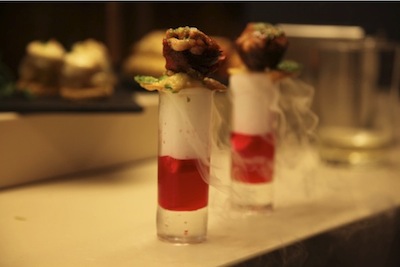
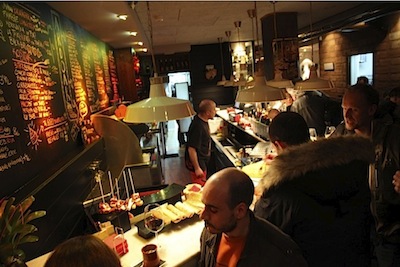
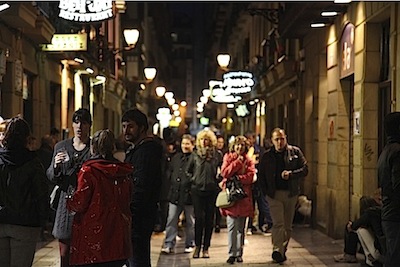
(Source: http://blog.honeyee.com/ttakashiro/)
I bought Mr. Takashiro’s new paperback the other day and finished it in no time. As the opening explains, this book is about the Spanish town of San Sebastián. It describes in detail why this small city became one of the world’s leading gourmet destinations, and what its story can teach us about tourism strategy.
I had three reasons for reading it. First, I was simply curious about the town. Second, I wanted to know how it developed as a tourist destination. Third, I thought I might learn something about Japan’s tourism strategy from it. Personally I found it an excellent book, so I’ll record it on the blog as reading notes.
Recommended for
・People who want to visit Spain
・People interested in food
・People interested in the tourism industry
Reading notes
・They taught each other new techniques and recipes, and, unbound by tradition, took in ingredients and cooking methods found on their travels around the world, creating one unprecedented dish after another. As a result, the whole food culture and the level of cooking rose at once.
・Give a story to the act of eating.
・It is said that whether a destination’s tourism infrastructure can absorb the enormous number of travelers will be the only concern for the tourism industry going forward.
・Inbound numbers and outbound numbers are proportional.
・Japan’s tourism has two problems: high prices, and a lack of foreign-language support with an international sensibility, including PR and other communication.
・In Spain, the psychological barrier to traveling abroad is low. It’s like Korea for people in Fukuoka.
・Positioning as a destination. Spain is cheap, warm and laid-back. And Japan?
・Each town in southern Spain specializes in targeting a particular country and meeting its needs.
・The most important thing in Barcelona’s tourism strategy is “tourists and residents being one.” Don’t treat visitors as guests; treat them like friends who came from far away. Don’t fawn over tourists.
・Creative Cities Network, e.g., Kanazawa, Nagoya
・Sell your weakness (your distinctiveness). “Lots of rain” became “Green Spain.”
・Cuisine made like science: molecular gastronomy. San Sebastián’s new recipes are born in laboratories.
・El Bulli, which made the world’s best cuisine public. Open-sourcing recipes.
・An international culinary school, and a four-year culinary university, were established to nurture the next generation of food.
・Food and the economy, which seem far apart, are closely related. Food and a country’s reputation.
・Miniaturization of dishes
・Make cuisine intellectual property, as a major national industry, and export it as an intellectual industry.
・Tourism success starts with knowing where you (your land) stand in the world. On that basis, protect traditional flavors while reproposing them to suit the present day.
・Know the classes (targets) of other countries. Living in Japan, you don’t notice that classes exist.
・Japan has no travel journalism. It’s all tie-up articles and a mass of advertising.
It takes about an hour to an hour and a half to read. It is written clearly and I learned a lot; it actually made me want to go to San Sebastián. If I had read this book before going to Spain, I would definitely have gone.
What caught my attention most was the line “make cuisine intellectual property and export it as an intellectual industry.” I found it fascinating that it’s not just about exporting finished dishes but exporting cuisine as a culture. However, the book doesn’t describe concretely how to export it, so I’m thinking of asking about it in his email newsletter.
Tsuyoshi Takashiro, Shodensha, 2012-07-01