November 2016
A Café Where East Meets West
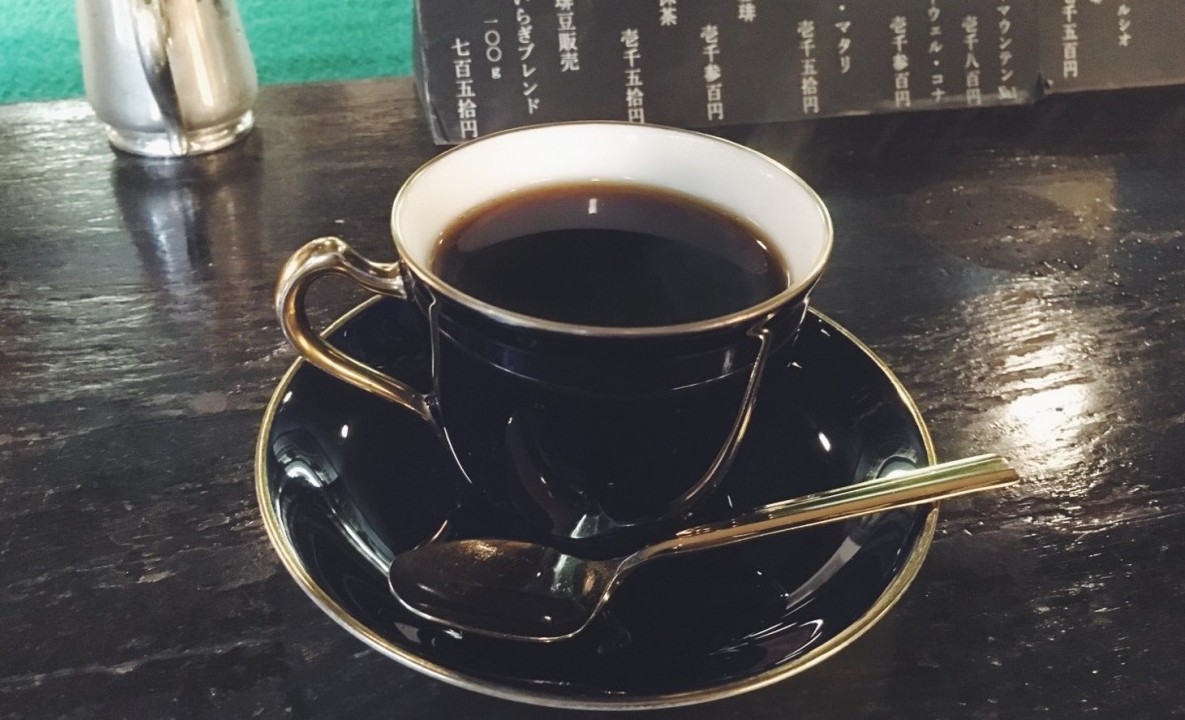
In Rokuhonmatsu, Fukuoka, there is a café called “Hiiragi,” my favorite coffee shop in all of Japan.
The atmosphere, the coffee, and the owner’s stories are all outstanding.
I’ve written about it on this blog a few times already.
Whenever I have plans anywhere near Fukuoka, I make an effort to go out of my way to visit.
On my recent business trip to Yanagawa, I stopped by on the way back too.
As soon as I got there, I ordered a coffee, watched the owner’s crisp, precise movements, and drank my freshly brewed cup.
The coffee here is clean and easy to drink. I ordered a cheesecake set too, and I ate it in tiny pieces, not wanting it to disappear.The water was pleasantly cold and delicious as well.
Then I asked the owner a question that had been on my mind.
“I’ve been coming here so many times, but why do I keep wanting to come back?”
He laughed a little, then answered seriously and thoughtfully.
“The sense of unity in the overall atmosphere is what matters. The flowers and plants we display, and the vessels we arrange them in, change with the seasons.
The coffee cups, too, I keep in balance, not leaning too far toward Japanese or Western styles. It’s a blend of East and West, and I think about how each piece can harmonize with the others.
When I brew coffee, I think about what the customer in front of me wants. Do they want it strong, regular, or mild? I serve each cup to suit that person.”
He spoke carefully, pointing to each flower and vessel in turn.
When visitors from overseas come, he asks them in short words, “Strong? Regular? Soft?” and tries to serve a cup that suits them as best he can.
Wayō setchū, the blending of Japanese and Western styles. I hadn’t heard that phrase in a long time, and I thought it was a good one.
The fusion of Japanese and Western. Not leaning toward one side, but bringing them into harmony.
I think this applies to our own media as well.
I feel that a product that includes some “Western” elements and reflects the times, rather than one that is purely “Japanese,” widens the audience that can receive it.
And always thinking about the person on the receiving end is the most important thing in doing business.
Everything exists because there is someone receiving it, and I believe we can add our own color on top of the satisfaction of each individual person.
By the time I left the shop, my head felt much clearer. I’ll go again the next time I’m in Fukuoka. It’s a place I want to keep visiting five or ten years from now.
.