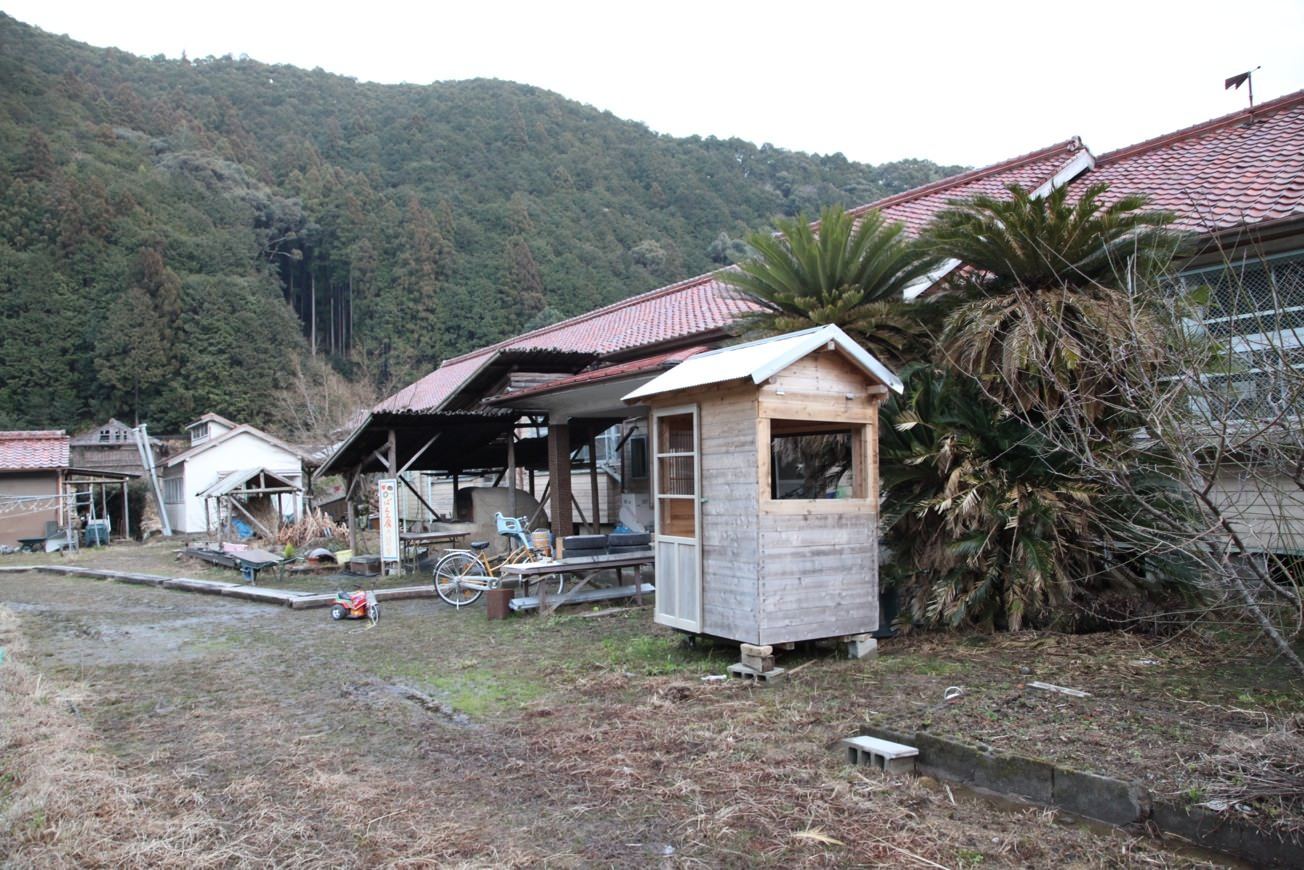
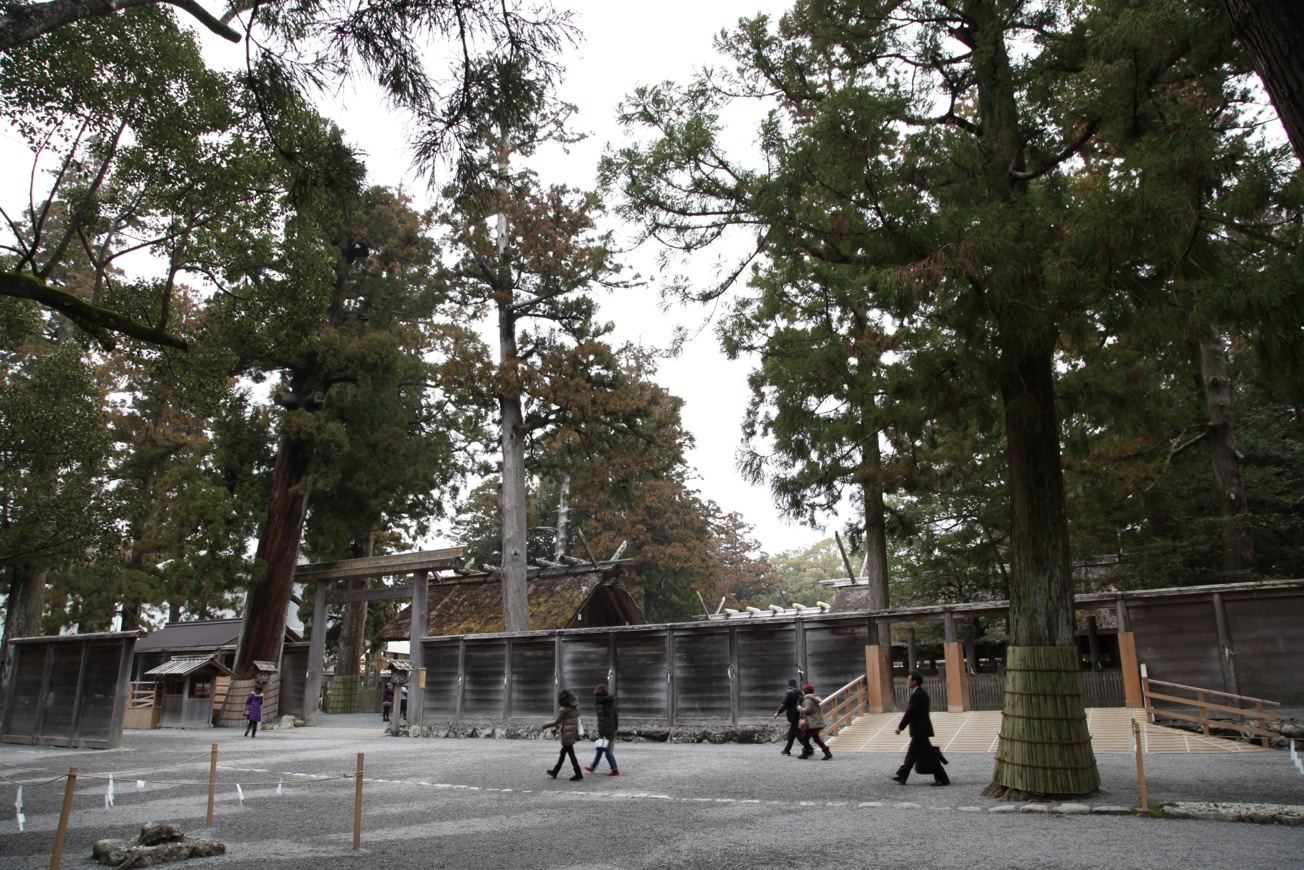
February 2013
Taking a Leave from Waseda to Forge a New Way of Living in the Countryside – Shogo Tasai
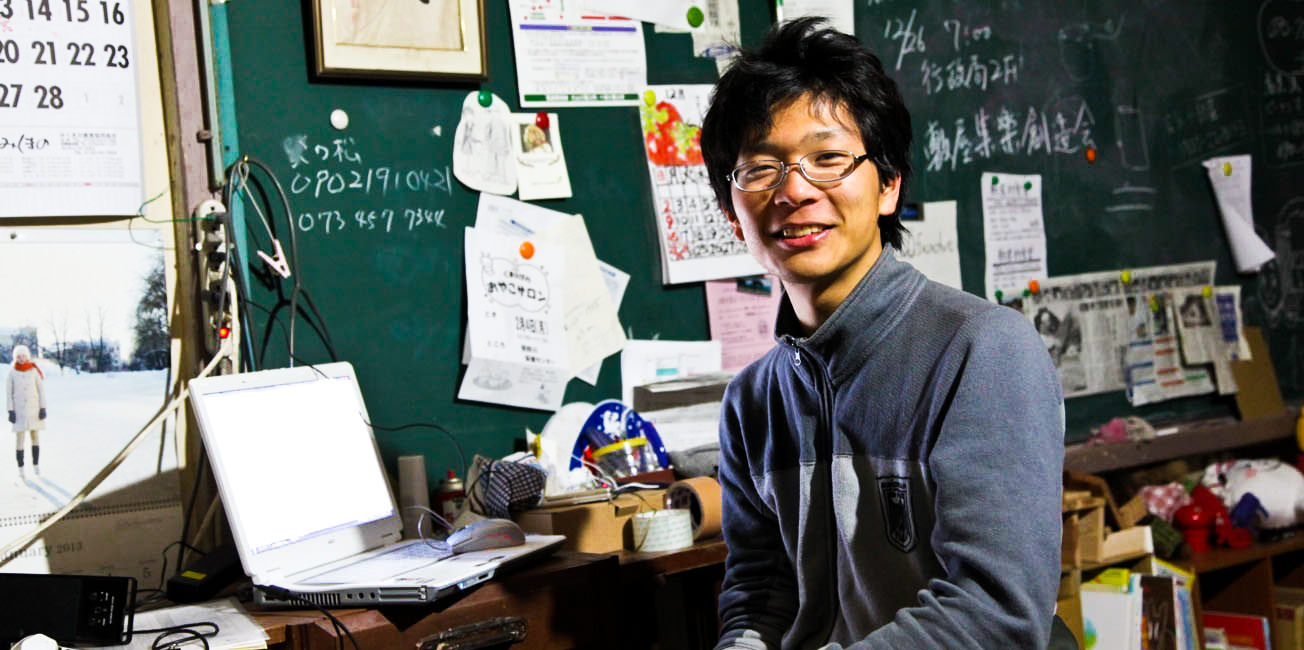
I met Shogo Tasai (@youyou_ziteki) the other day in Shingu, Wakayama. He took a leave of absence from Waseda in his third year and is interning at the NPO “Yama no Gakko” (Mountain School) in Shingu. I think his activities could become one model for young people from now on. This time, I interviewed Tasai. If you have no particular desire to go abroad but want to explore Japan’s possibilities, do farming, or revitalize a local community, please do read this. I feel his experiences are full of hints for how young people like us can live from here on.
◆
****‖Please tell us about the activities you’re doing now.
I was selected for a program called “Think Shingu,” which invites young people: in exchange for carrying out activities, research and surveys that benefit Shingu City in Wakayama Prefecture, it provides a 50,000 yen monthly activity allowance plus meals and lodging. I’ve been working in the city as a commissioned researcher for the NPO “Yama no Gakko.” Right now I’m in the middle of launching a project called “Kumanogawa Shogaku-mai” (Kumano River Scholarship Rice), in which half of the sales of rice grown in the former Kumanogawa Town goes to the producers and the other half goes to support junior high and high school students.
01. A Fateful Encounter with “Think Shingu”
****‖Why did you take a leave of absence and choose this activity?
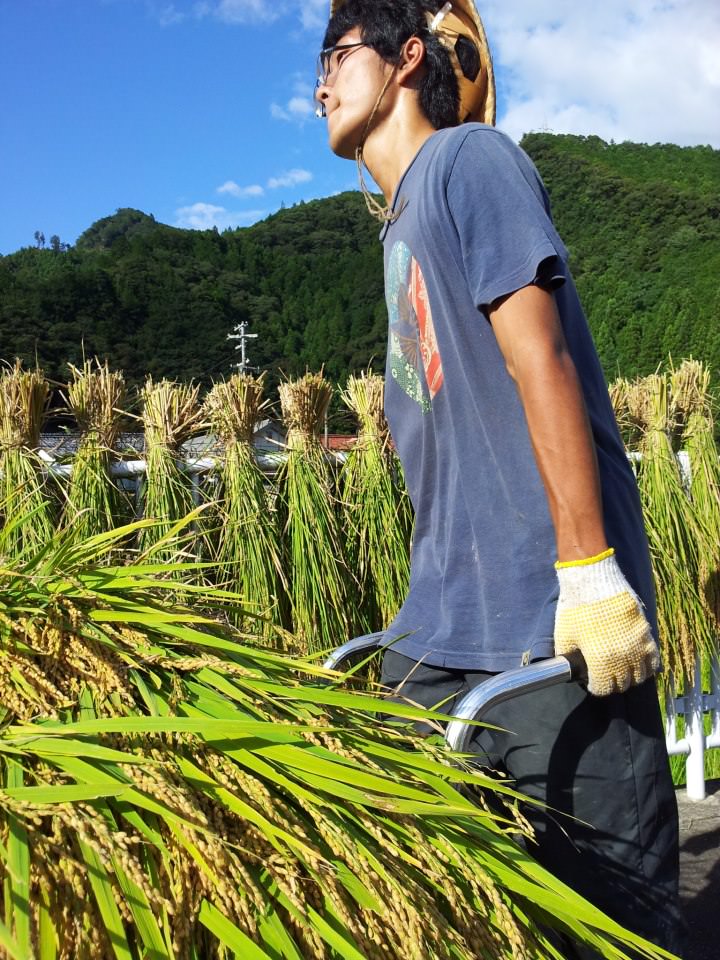 The year before last, I took a year-long seminar with a freelance journalist named Hajime Takano. He’s a rather unusual person who lives a farming-oriented life in a rural corner of Kamogawa in Chiba Prefecture while working as a journalist, and I was inspired by him both inside and outside class (outside class meaning izakayas, his home in Kamogawa, etc.). As a result, I became very interested in the themes of “the countryside” and “agriculture.”
But for the 20 years since I was born, I had lived in Matsudo, Chiba, a typical suburb. So I had only book knowledge of both “the countryside” and “agriculture.” That frustrated me. My interest and impatience grew and grew, and day by day I felt, “I can’t keep studying at university in peace while holding such complicated feelings.”
I think it was around the end of December the year before last that I actually decided, “I’ll take a year off and immerse myself in rural Japan.” I hadn’t decided where to go in advance, so I searched for candidates all over Japan. That’s when I came across “Think Shingu,” which I mentioned earlier.
My leave of absence was originally completely “unstrategic” (wry laugh). I only had the feeling that “I want to immerse myself in rural Japan!” and almost no concrete plans or vision for the future. Actually, I didn’t want to make plans in advance. Rather than an internship or training program with the content already decided, I wanted to be taken in somewhere that would respect my initiative and autonomy to some extent, where I could live for a while and take on whatever I felt like doing at each point. …That’s selfish to the extreme, isn’t it (laughs)?
Naturally, it was hard to find a place that would accept such selfishness. In the midst of that, I was truly grateful that Mr. Shibata, the coordinator of “Think Shingu” and head of “Yama no Gakko,” showed understanding. When I consulted him, he said, “Why don’t you take the stance of settling in and living here for six months, then spend the remaining six months sorting out what you want to take on?” The moment I found “Think Shingu” while surfing the net, I felt an inexplicable excitement, and I really think it was a fateful encounter.
It turned out to be a year of far more fulfilling learning than the vague expectations I had in early spring. When I’m an old man looking back on my life, I think I won’t be able to tell my life’s story without this year; it has become that significant a year.
02. This Leave of Absence Let Me Emerge as a Member of Society
****‖What have you noticed or what has changed for you over the past year?
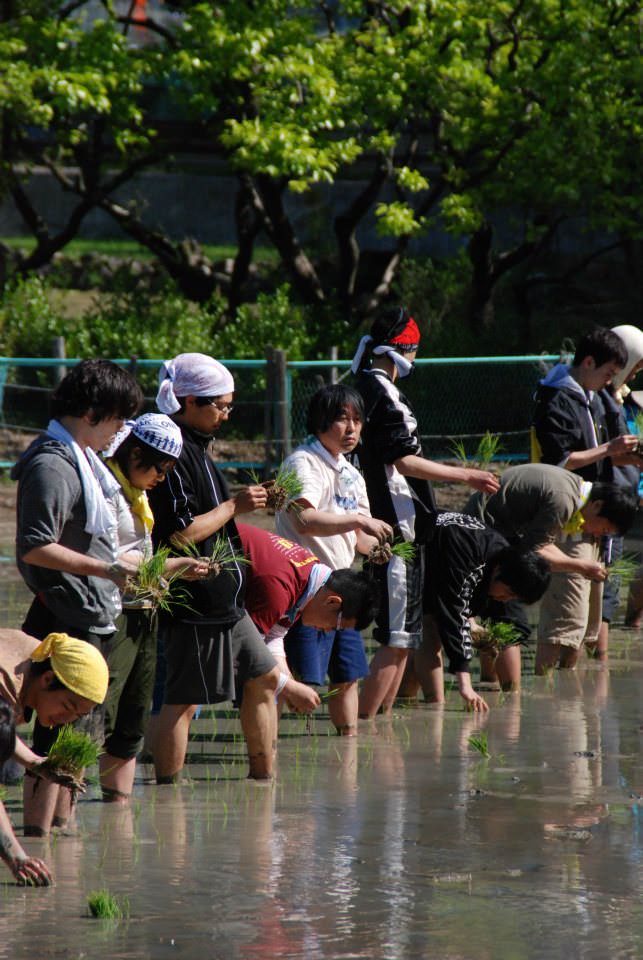 I think it’s that I realized for the first time the importance of “being a stakeholder.”
The Great East Japan Earthquake the year before last was personally a huge shock, and since then I began asking from scratch what the real problems in Japan are and what I can do. But partway through, it started to make me sick. Even though I thought I was thinking seriously, my ideas somehow felt “floating in the air.” At the time, I had no idea why.
By coming here, I realized that only when your position in the world is settled can you take on society’s problems as “your own business.”
In Professor Takano’s seminar the year before last, the very first thing, as a self-introduction, is to “use a mind map to express yourself.”
※Professor Takano’s model example → http://www.the-journal.jp/contents/takano/takano-iden-thumb.jpg
Looking back at that exercise now, what I notice is how little social awareness I had.
Most of what I wrote down was about school life. The clubs I belonged to, what I was interested in studying, and so on. There were almost no connections to society outside school.
Having a community that is the center of your life, organizations and communities you belong to, and a broad network of acquaintances from various backgrounds… I think it’s only by living within all these connections to society that your thinking gains concreteness and urgency. Skills and knowledge can’t be put to use just by having them. They can be put to use only within relationships with society.
All a mere student can do is vaguely think about “what I want to do and what I can do.” Acting concretely, and correcting those vague ideas into something grounded, only comes after actually jumping into society outside school. I didn’t understand that, in a sense, obvious fact, and while staying in the world of school I kept brooding, “isn’t there something I can do, something I can do,” so my frustration grew. That’s probably exactly why I took the leap into a leave of absence. My status is still that of a student, but through this leave I was able to emerge as a member of society. That’s how I feel.
Tasai’s activities have been widely covered in the local newspaper too.
03. The End of the Era of Measuring a Life’s Worth by Income
****‖What kind of life do you plan to lead after returning to school and after graduating?
After graduating, I want to “take up village life” (shuson) in some settlement in Shingu City. There, with subsistence farming as the core, I want to earn cash income from multiple fields, such as journalism, history education, and other areas I’m interested in, as well as the odd jobs of country life. And in the gaps in between, I’d also take on social contribution and hobbies that work can’t achieve… I’d like to establish that kind of lifestyle step by step.
The reason I want multiple jobs is that I want to work at my own pace without compromise. If you depend on a single occupation for income, when you hit a point where you must weigh “my ideals and commitment to my work” against “making a living,” you have no choice but to choose “making a living,” right? If I’m a sole proprietor with multiple income sources, that contradiction can be resolved. I think it creates breathing room. And with this way of working, it’s relatively flexible to balance hobbies outside work, time with family, and non-profit social contribution activities. With multiple jobs I probably won’t earn much, but the era of simply measuring a life’s worth by the size of one’s income ended long ago. I just need to have my own standard for how much cash income I need to live healthily, and earn that amount properly. (If this topic interests you, please read the book “Nariwai wo Tsukuru” [Creating a Livelihood].)
04. A Way of Life: “The Countryside” × “Multiple Jobs & Sole Proprietorship” × “Subsistence Farming”
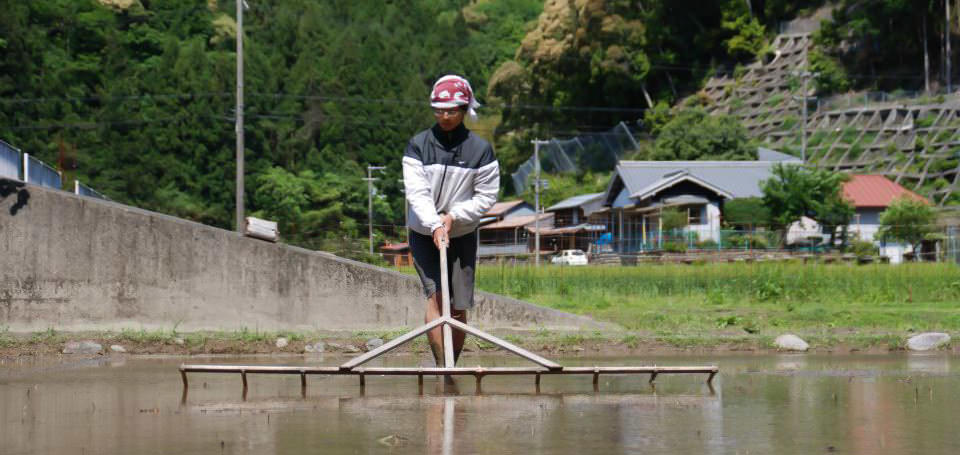
I want to practice this way of working on the foundation of “subsistence farming.” Even if all my monetary income were cut off, as long as I’m farming reasonably seriously, I can literally “get by and eat.” Of course, such a situation will hardly ever happen, but I think there’s probably a huge difference in peace of mind between having the foundation of “subsistence farming” and not having it.
I deliberately distinguish “subsistence farming” from “multiple jobs & sole proprietorship.” Since humans began farming and herding about 10,000 years ago and started building civilization, the overwhelming majority of people have lived while engaged in agriculture. Originally, people and agriculture were closely connected and inseparable, weren’t they? Isn’t it a bit abnormal that in these several decades since the war they have drifted apart so rapidly?
My interest in “agriculture” and “the countryside” began with this simple question that suddenly arose while studying history. So I definitely want to cherish this starting point.
I’d like to work with everyone in Shingu on preparing for what lies beyond the economic growth society. Preparing for what lies beyond the economic growth society simply means gradually reviewing our current over-dependence on money and exploring a good landing point. Reviewing our over-dependence on money means building up our ability to be self-sufficient as individuals, and building up depth of mutual aid, so that we’ll be fine even if economic strength declines and personal incomes fall, or if tax revenue drops and the government’s various subsidies shrink and public assistance dwindles. For exploring that landing point, the way of life of “the countryside” × “multiple jobs & sole proprietorship” × “subsistence farming” feels like the best fit for me.
If you ask how exactly I’ll handle the parts other than “subsistence farming,” there’s still a lot that isn’t firmly decided at this stage. It’s not cool, but let me honestly say, “It hasn’t been decided.” That said, though vaguely, I have decided on the fields I want to work in: “journalism,” “history education,” “youth support,” and “Japan-China exchange.” For now, for the first year or two I’ll focus on settling into village life and establishing the cycle of subsistence farming. Alongside that, I’ll earn cash income by working as a commissioned writer for the local paper and a tutor at a cram school, while getting to know Shingu’s situation more deeply and expanding my relationships with local people. In that way I’ll gradually clarify what I want to do and can do, and aim to “start a business”… that’s the style I’m considering now.
I’ll return to Tokyo for now this April, but I think I’ll show up in Shingu fairly often. While I’m still in school I’ll be relying quite a lot on Mr. Shibata, but I intend to keep working on “Kumanogawa Shogaku-mai.” I also want to get to know many more people living around Shingu. In particular, I’d like to connect with Shingu’s students and their parents.
As a way to do that, I’m now discussing with the owner of a local cram school about writing a column as a current university student in the school newsletter, and filling in as a temporary instructor just during summer. Since it doesn’t feel right to only have contact with kids from one particular cram school, I’d also like to create a magazine or free paper on the theme of “careers” for junior high and high school students and their parents. I also plan to organize, on and off, exchange events between university students and local junior high and high school students, like the one for which I invited Mr. Aoki this time.
Besides that, I want to consciously train my skills related to food, clothing and shelter, and I also want to value increasing my fellow students.
Also, I want to do some serious book study. …Actually, I’m thinking of taking another year of leave. I basically intend to continue everything I’ve described in parallel, but I want to focus on book study during that additional year. Right now I have a lot of things I want to think through thoroughly, and I probably can’t cover them all in two years. Also, recently I’ve come to want to see widely both inside and outside Japan, like Mr. Aoki.
This one year of leave has been truly significant: the possibility of going all-out job hunting in Tokyo has effectively vanished, and I’ve come to feel that being somewhat earlier or later in entering society is not a problem at all. Ah, but I don’t want it to be too late. It would be annoying if I couldn’t keep up with developments in Shingu.
Shogo Tasai. Born in 1992, from Chiba Prefecture. Third-year student in the Japanese History course, School of Humanities and Social Sciences, Waseda University. After entering university, he took the “Okuma Juku,” whose headmaster is the journalist Soichiro Tahara. His studies there deepened his interest in themes such as “the countryside” and “agriculture.” At the end of his second year he decided on “study in a farming and mountain village,” and in the 2012 academic year took a year’s leave from university. He lives in a settlement called Nishishikiya in Shingu City, Wakayama Prefecture. Twitter: @youyou_ziteki Facebook: Shogo Tasai
◆
After the Interview
“Taking a leave of absence.” I hear from my juniors at university that taking a leave and doing something has become a kind of status symbol. A leave of absence is a fairly risky act: you can’t put responsibility on anyone else, and you have to take it yourself.
But as I’ve said before, if there’s something you truly want to do, and if taking a leave is truly necessary, I think it’s fine to keep it as one option. There’s no rule that you must graduate university in four years, and it would be a waste to shorten your own university life over something like that.
Previously, I interviewed a couple who traveled around the world on the theme of organic living. Picking up people I find interesting and activities I want more people to know about is one way this blog can be, I think, and this time I interviewed Tasai, who is active at ThinkShingu, an NPO in Shingu, Wakayama Prefecture.
My impression of Tasai, in a good sense, is that he’s relaxed. (Except when he speaks in front of people, lol.) For Japanese people, especially those in big cities, there’s an equation of “living = earning = being able to eat,” and to eat you have to earn money. I’m the same.
But Tasai and the people in Shingu have the experience of growing and eating their own food. They don’t necessarily depend on money in order to live. Precisely because they have that formative experience, they can live positively and with peace of mind.
As I wrote at the beginning, I think Tasai’s activities could become one role model for Japan’s young people in the future. Because you’ve gone out to the big city, there’s a world you can see, and that’s exactly why there are things you can do in the countryside. Kyoiku Gakusha embodies that place, and Tasai is making good use of his own background in the land of Shingu.
Many people say that from now on is the age of the countryside, and in fact the number of people actually starting to move is increasing. I think an age has come in which it’s precisely young people who can compete in the countryside.
Yu Aoki
▼I visited Kyoiku Gakusha.
https://www.aokiu.com/2013/02/15/kyoikugakusha/I visited “Kyoiku Gakusha,” an abandoned school in Shingu, Wakayama Prefecture.
▼I interviewed a couple who traveled the world on the theme of organic living.
https://www.aokiu.com/2012/07/05/world-organic/Organic × Around the World! I interviewed a couple who quit their jobs and traveled around the world.