November 2013
The Time I Hosted a Ukrainian Woman Through CouchSurfing
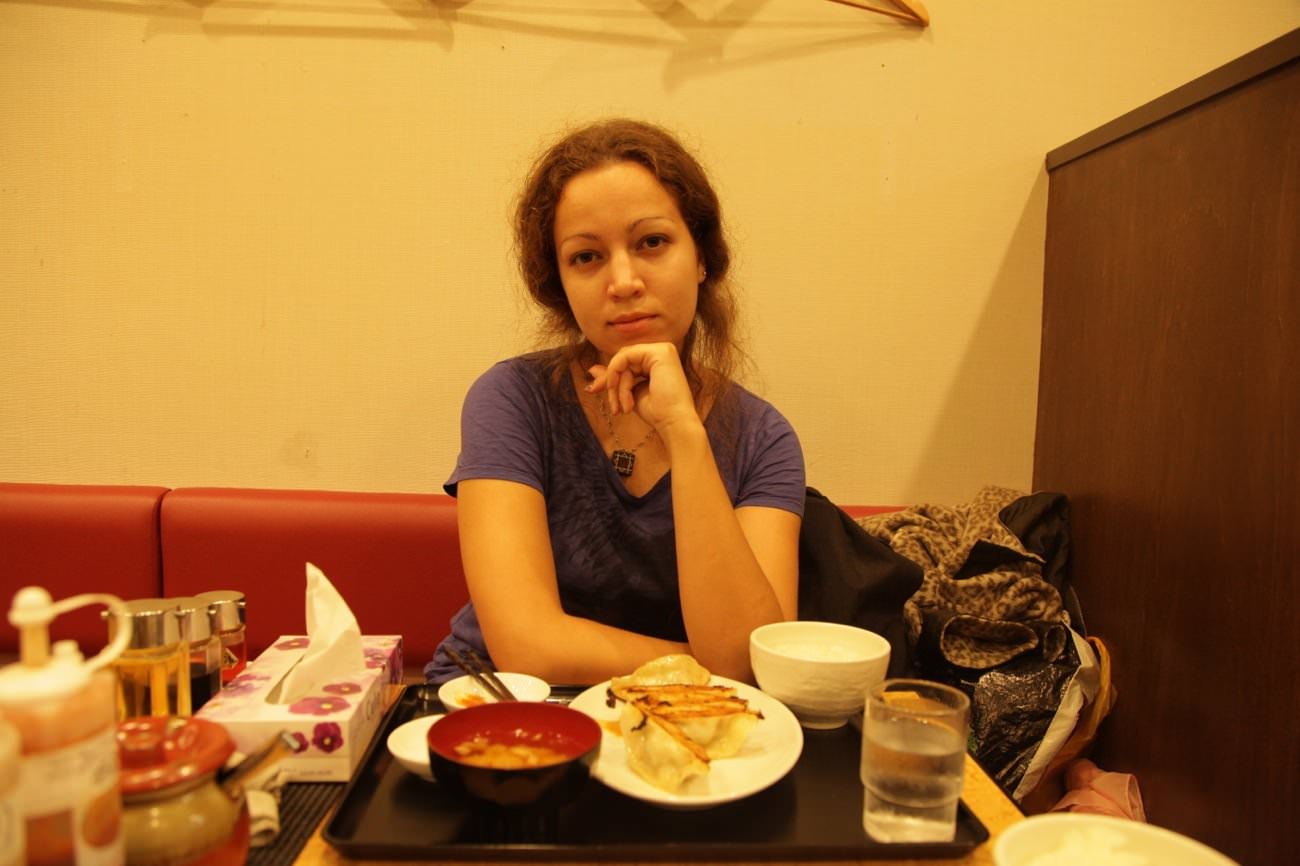
“Oh, what are you looking at?” @ a gyoza restaurant in Nakano
Thanks to social media, individuals all over the world are now connected to one another. I felt the benefits of that directly while traveling, and I think many people on the road today feel the same. Of all the services I used during my trip around the world, the one that helped me most was CouchSurfing. CouchSurfing is a social network that connects travelers with locals, where you can go out for meals, get shown around, or even be hosted for a night. And it’s free.
I was helped by so many people abroad through CouchSurfing that I always wanted to host someone myself one day. Recently a Ukrainian woman contacted me, and I had her stay at my place.
It turned out to be a really interesting experience. Some of you may be wondering how CouchSurfing even works, so I’ll cover that briefly too, and write down what I thought about over these two days.
Signing up for CouchSurfing
Signing up is easy. The tedious part is building your profile. Still, you’re meeting strangers regardless of nationality, so you need to fill it out carefully. If you log in to CouchSurfing and set yourself as available to host, you’ll get messages a few times a day. How many seems to depend on how often you log in, how quickly you reply, and how many references you have.
From getting a message to actually meeting
From receiving a message to meeting in person, the flow goes like this:
-
Receive a message.
-
Arrange the date and place.
-
Meet up.
This time, Maria from Ukraine sent me a message, we arranged the schedule, and we met at the north exit of Nakano Station. We had already seen each other’s faces, so it was easy to find each other. Both the messages and our conversations were in English.
Check the references
When you meet someone through social media, what worries you most is “what kind of person are they?” Obviously, not everyone is a good person.
CouchSurfing has a system called references, where hosts and guests rate each other. Someone was late, someone was wonderful, someone put me in a dangerous situation. You can leave those evaluations and read them. If you’re a woman hosting someone, or staying with someone, you absolutely must check them. I hear that quite a few problems happen…
Where to put your guest
True to the name CouchSurfing, I was going to have her sleep on the sofa, but that felt too rude, so I bought a folding mattress online. I didn’t have a spare futon, so I used a sleeping bag and gave her the futon. I think it’s important to state clearly what your room is like and where the guest will sleep.
The “Water Incident”
This is a little story from the experience. The Ukrainian woman arrived and said she wanted to take a shower, so I closed the hallway door and let her use it.
Then the sound of the shower kept going for over 40 minutes. That seemed a bit long, and I wondered if something had happened, so I opened the hallway door. I heard “shasha, shasha, shasha, shasha, shasha…” and the hallway was fogged up with steam.
What on earth was she doing? When I asked, she was in the bathroom hand-washing her clothes with my soap. “Please, use the washing machine.” “It’s a waste of water. Don’t waste water,” I said. She replied, “I wanted to do laundry.” “I thought water was unlimited.” “You should have told me sooner.”
This really surprised me, and it drove home how much cultural differences exist, and how important it is to say things clearly in words.
“Omotenashi” (Japanese hospitality) is not as easy as people say.
I’d interacted with many foreigners visiting Japan at university and on my travels, but hosting someone at home was a first, and I learned a lot. Like the water incident, problems caused by different cultural backgrounds are surprisingly common.
When I stayed at foreigners’ homes during my trip, there were times when things I took for granted weren’t taken for granted by them, and it caused trouble. The difference in “sense of time” is the easiest example. After that I started asking about everything as I went, but not everyone can do that from the start.
Having trouble is not a bad thing in itself. It comes from differences, so it can’t be helped. What matters is to clash openly through words so it doesn’t happen, and to build systems so that it doesn’t happen.
As the Olympics approach, Japan will have no choice but to get serious about welcoming foreigners. I want to do what I can so that people who come to Japan have better experiences. “Omotenashi” is not as easy as people say.
Things to watch out for
Based on this experience, here is what I think I need to be careful about when hosting foreigners on CouchSurfing.
・Japan has little Wi-Fi, and few people know how to buy a SIM card, so many visitors have no internet access. It’s important to decide the meeting place as specifically as possible.
・Explain the whole house. How to use the shower, how to get hot water, how to use the toilet, what they may do and what they may not do, as clearly as possible. For example, “You can use this, but ask me about anything else.”
・Check the references and prevent trouble. Just as you wouldn’t want to use an online shop with terrible customer reviews, you wouldn’t want to stay at the home of someone with bad reviews, and you shouldn’t host them either.
There are probably other things too, but that’s it for now.
That’s what I thought about after hosting through CouchSurfing. It was my first time and I was awkward, so I’m grateful to Maria for coming.
This weekend, a man from Israel is coming to stay. Hosting foreigners forces you to speak English whether you like it or not, and makes you notice all kinds of cultural differences and needs. From now on I want to put into practice hosting foreigners twice a month.
If you live alone, have a little spare room, or want to talk with foreigners, I recommend trying CouchSurfing once. It’s not easy, but it’s fun, and you’ll constantly realize new things.
Here’s the CouchSurfing site
https://www.couchsurfing.org/Welcome to Couchsurfing! – Couchsurfing
The layout is a bit broken, but it supports Japanese.
I wrote this for people who want to travel.
https://www.aokiu.com/2012/06/21/firstbackpack/For Those Who Want to Travel Solo Abroad! A Backpacker’s Beginner Guide by a Round-the-World Traveler | Hibilog | A Blog on Round-the-World Travel, Daily Life and Reflections