May 2012
Dedicated to Those Who Want to Hitchhike: A Roundup of Hitchhiking Tips
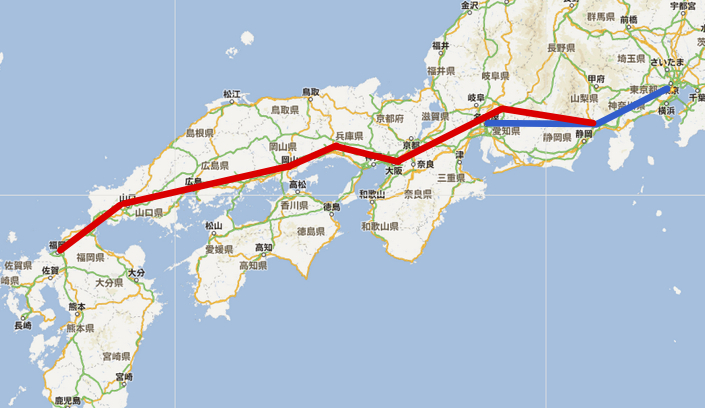
The routes I have hitchhiked so far
Red line: round trip to Nagoya
Yoga IC (Yoga Station) → Fujikawa SA → Nagoya Station
Nagoya Hongo IC (Hongo Station) → some PA → some PA → Atsugi Station
Blue line: Shizuoka, Osaka, Fukuoka
Fujikawa SA → a PA near Nagoya → a PA before Osaka → Toyonaka IC
Toyonaka IC → a PA near Osaka → Dazaifu Station
After coming back from my trip around the world, I hitchhiked from Tokyo to the Kansai region and on to Kyushu. Part of the reason was that I had no money after returning, but 90% of it was going with the flow and wanting material for stories. You could call it youthful recklessness. I also think I felt that hitchhiking was somehow cool, and that it was something I should do while I was young. I’ll write about what I thought of it later, but in total I have hitchhiked 10 times. I don’t know whether there is such a thing as a world of hitchhikers, but if there is, I’m still at the bottom rank.
In this entry, based on my hitchhiking experience, I’ll write about how to hitchhike, its appeal, things to consider, and various other things. The detailed routes and the places where I hitchhiked are listed above. I’d be happy if this helps anyone who is thinking about hitchhiking or is curious about it.
From the Road to the Expressway: Hitchhiking in Front of an IC
・Sign hitching
You write something big like “Toward Nagoya,” “Toward Tokyo,” or “North!” on a piece of cardboard or a whiteboard, and hold it up. Having a sign doesn’t mean people will stop. What matters is holding the sign with confidence, looking the driver in the eye, and appealing to them with “Please give me a ride!” At first people’s stares hurt, but you have to accept that as an initiation. In my first 30 minutes in front of Yoga IC, the stares were so painful that I wanted to go home. It helps to remember that nobody is going to remember you. Takeshi Takashiro also said it might be fun to hitchhike with text flashing on an iPad. I hope someone tries it.
・Thumb hitching
I went on at length about sign hitching, but the thumb is also an effective hitchhiking method. When I went from Toyonaka IC in Osaka to Fukuoka, I used thumb hitching. It takes more mental strength than the sign, but it feels all the better when you get a ride. Thumb hitching needs no preparation. You raise your arm horizontally and stick your thumb up. That’s all.
・Knock hitching on cars waiting at the light in front of an IC
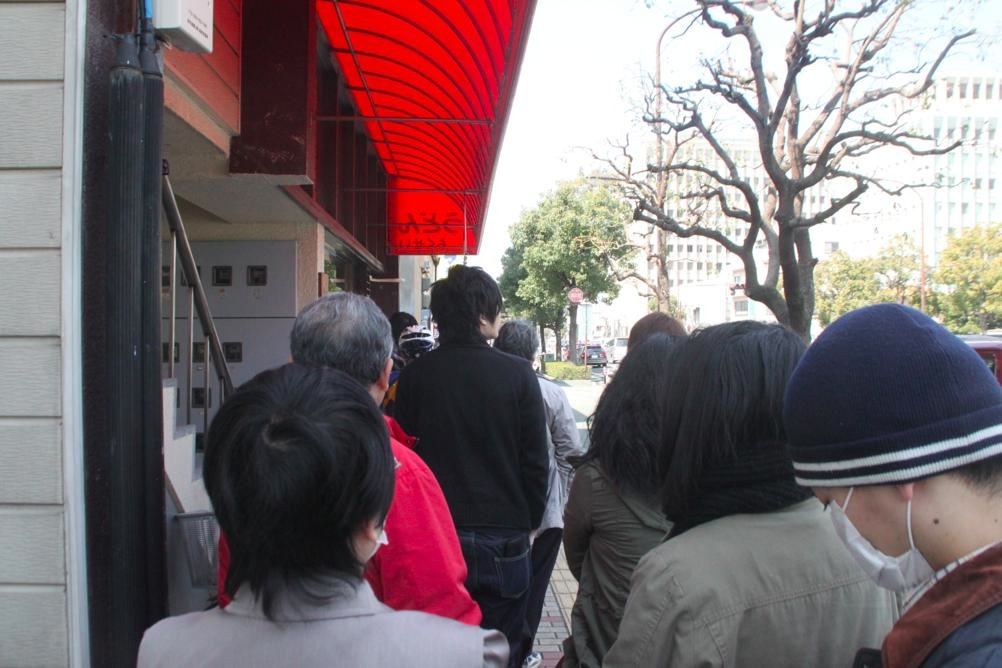
From my experience, this is the hardest one to try. While cars heading for the expressway are waiting at the light in front of the IC, you run over and knock on the window to ask. The hardest was when I was going back to Tokyo from Nagoya Hongo IC. In front of the IC there were four lanes, and the lane for the expressway was the second from the left. Whether I held up the sign or stuck up my thumb, nobody responded. It’s not funny. Sometimes I was even hidden behind the car in the rightmost lane and couldn’t be seen. So, when the cars stop at the red light in front of the IC, I run over, knock, and ask. The question is how many cars you can reach in the 40 seconds of the red light. For the person being knocked on, it must be unbearable. If I were the driver, I’d be shocked too. Who is that!?
Hitchhiking at SAs and PAs
When hitchhiking at a service area (SA) or parking area (PA), you first look for a car with a plate from your destination. When going to Fukuoka, a Kyushu plate; when going from Tokyo to Nagoya, a Kansai plate. The reason is simple: the driver is likely to be heading home to the place written on the plate. So when I arrive at an SA or PA, I first walk around and find a few candidate cars. Once you find a car, the next important thing is the timing of when you speak to the driver.
The moment to aim for is when the driver starts the engine. The moment the driver starts the engine, you jog over to the car and knock. Then, while the other person is confused, you introduce yourself and say something like “Please give me a ride,” and quite often they will. I came up with this method at a PA near Osaka, and from then on I was picked up within 20 minutes at every PA. Of course, speaking to the driver when they come out is also fine. Find the way that feels most effective for you. It’s also important to get dropped off at a big PA.
Three Things to Tell the Driver When You Hitchhike
When you hitchhike, how well you can make your request in a short time is also important for raising your success rate. In a short time, you need to tell them three things: your destination, why you are hitchhiking, and a short self-introduction. If you give the second one, the reason, they are more likely to give you a ride than if you simply say “Please give me a ride!” They think, “Ah, I see, this kid is hitchhiking for this reason.” Also, in your self-introduction, it’s important to slip in a few phrases that make them curious. I mixed in words like “I was traveling around the world until January this year” and “college student,” and other words that might catch the driver’s attention. If they think “this guy seems interesting,” they will often give you a ride quite happily. Of course, when you are given a ride, you need to thank them properly. But I also think you shouldn’t get a ride by playing on sympathy.
The Appeal of Hitchhiking
・Meeting people you never expected to meet
The appeal of hitchhiking is, first of all, meeting people. In an entry I wrote the other day, I wrote about meeting people you hadn’t expected to, and hitchhiking is exactly where that kind of encounter happens. The drivers who have given me rides include a man living in Nagoya who followed idols in Tokyo’s Akihabara, a business owner who had worked in trade in China for more than ten years, a pro golfer, a 70-year-old Englishman who had worked in trade for decades, and a famous musician who had trained in music in Belgium for many years, among all sorts of other people I would never normally meet. Some of them even became my friends on Facebook, and we grew close. Many of the people who give rides were unusual people.
・You save on transportation costs
This is quite significant. However, once LCCs spread and you can get from Tokyo to Fukuoka for around 5,000 yen, I think the advantage of saving on transportation will fade. Recently, overnight buses have also become quite cheap. And the timing is uncertain, and you don’t even know whether you’ll reach your destination.
・It trains your mental strength.
It trains your mental strength. That’s for sure. With knock hitching at the light in front of an IC, and SA/PA hitching, you won’t get picked up unless you move yourself. And when you can’t get a ride for hours, you feel as if everything about you has been rejected. Hitchhiking on a rainy day is the worst, but when you get through it, you feel something indescribable.
That’s what I wanted to write about hitchhiking. I meant to write a little and finish, but before I knew it, it got long. Personally, I recommend hitchhiking once while you are a student. Horiemon is said to have hitchhiked to Tohoku in his student days, and several working adults I respect also did it as students. If you want to do something interesting, why not set off on a hitchhiking trip next weekend? Something might change.
※ Women, please be careful to avoid trouble. If possible, I think it’s best to go in a group of two or more.
In the next entry, I’d like to write about what I thought after traveling around Japan for a month.
Hitchhiking blog entries
My First Hitchhike in Japan ~ From Tokyo to Nagoya ~
My First Hitchhike in Japan ~ Nagoya, Day 2 ~
My First Hitchhike in Japan 〜 The Final Day 〜
▼ Hitchhiking is great, but backpacking overseas is fun too.
https://www.aokiu.com/2012/06/21/firstbackpack/A Backpacker’s Beginner Guide by a Round-the-World Traveler, for Those Who Want to Travel Abroad Alone!
The first time I traveled overseas alone was in the summer vacation of my third year of university. I spent about two weeks in Thailand, Cambodia and Malaysia. That experience has greatly influenced who I am now, and it was also what led me to actually set out on a trip around the world. …