June 2012
For Anyone Who Wants to Travel Abroad Solo! A Backpacker's Beginner Guide by Someone Who Has Gone Around the World

Another dimension: Ta Prohm (Siem Reap, Cambodia)
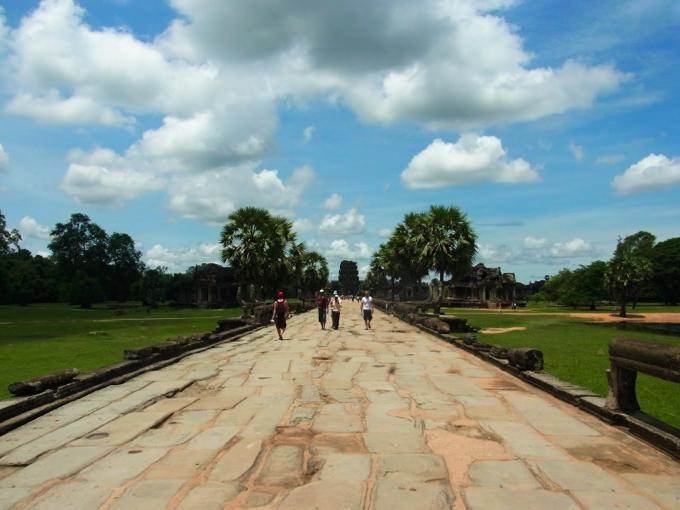
Magnificent Angkor Wat. (Siem Reap, Cambodia)**
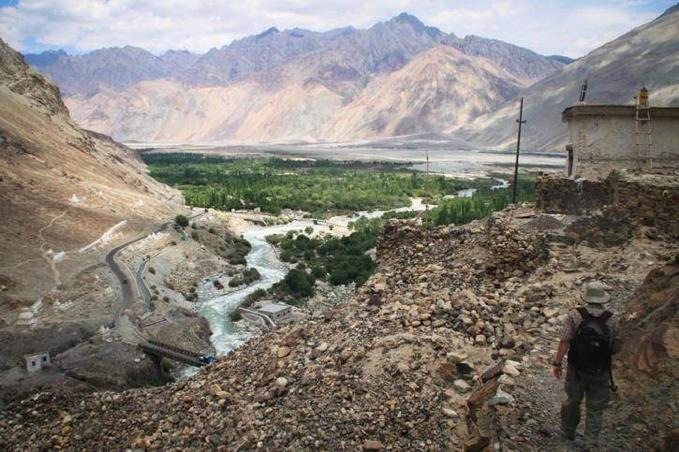
Breathtaking Diskit village in Ladakh (Ladakh, India)
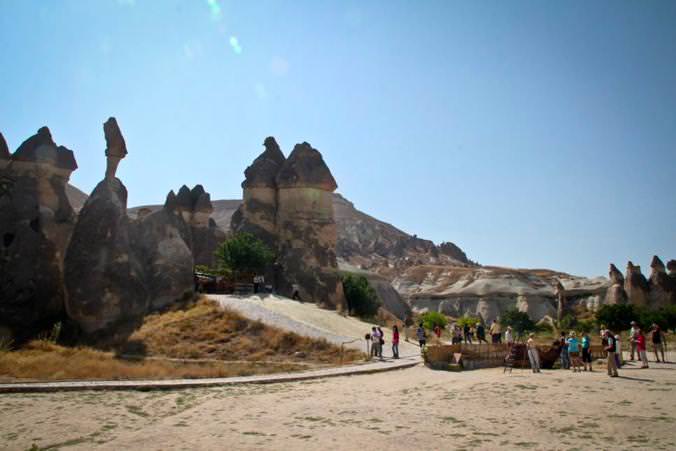
An alien planet: Cappadocia. (Cappadocia, Turkey)
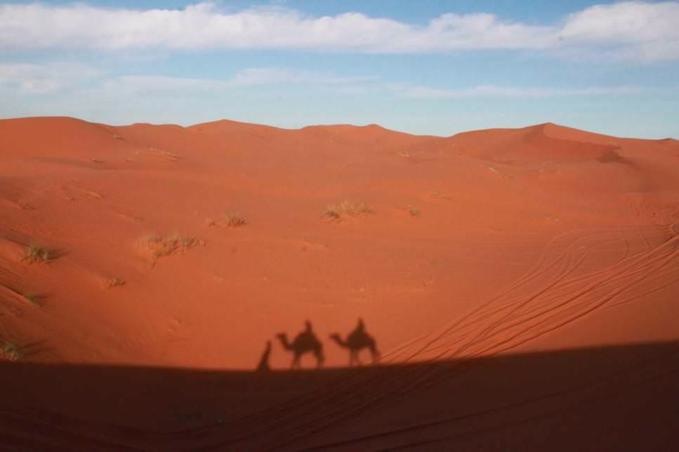
The Sahara Desert (Merzouga, Morocco)
My first solo trip abroad was during the summer vacation of my third year of university. I went to Thailand, Cambodia and Malaysia for about two weeks. That experience has had a huge influence on who I am today, and it was what actually led me to set out on my round-the-world trip.
On that first solo trip, I was nervous about everything. At first I didn’t know where to go or what to bring. I had no idea how to buy a ticket. At the airport I kept asking, “Can I really board with this?” These days buying tickets online is a matter of course, but back then I didn’t have even that knowledge. Nobody around me traveled solo, so I remember searching the web endlessly for information about solo travel. I also wasted money on guidebooks.
As I remember it, there were few articles about solo travel that really made sense to me. I think I prepared for the trip by piecing together a few fragments of information. In the end, the knowledge I got that way wasn’t very useful. I wrote this entry in the hope that it will help people who want to travel abroad for the first time, travel solo, or go backpacking. It got long, so I’ve listed the contents below.
1. The Appeal of Traveling Abroad Solo
2. What to Bring
3. Gathering Information
4. Travel Insurance / Vaccinations
5. Planning Your Route
6. How to Buy Flights
7. From a Japanese Airport to a Hostel Abroad
8. Staying Connected While Traveling
9. English
10. Recommended Countries for Beginners
11. When You Get Sick or Run Into Trouble
1. The Appeal of Traveling Abroad Solo
The appeal of solo travel abroad is, above all, freedom. You can do whatever you want. You don’t have to leave your hostel, or you can drift off to wherever you happen to feel like going. You can spend the whole day spacing out. You don’t have to worry about what other people think. Compared with package tours, you can change your route freely, and it costs less, which is another big attraction. The people you meet while traveling often become the turning point of your life. You randomly meet people you would never have met if you’d stayed in Japan.
The moment I arrived at the airport on my first solo trip, and the thrill of crossing the border from Thailand into Cambodia over land, the feeling of stepping from one country into another on my own two feet, are things I still can’t forget. I didn’t quite jump for joy, but I remember pumping my fist inside when I crossed that border.
I’ve written a lot here, but the joy of solo travel can only be understood by people who have actually done it. I really hope many different people will try traveling solo.
2. What to Bring
I’ve written about what I took on my round-the-world trip, useful things I wish I had taken, and things I found I didn’t need, so please use it as a reference. Apart from the essentials, you can get most things abroad. But on your first trip abroad, it’s certainly reassuring to prepare a certain amount in advance. As you travel, you’ll come to see what you really need, so you can gradually cut or add things. In this entry I’ll go into detail about the bare minimum you need.
・Passport
You can’t go abroad without it. Passports come in two kinds, valid for 5 years or 10 years, but I think 5 years is fine to start with. For where to get one, the Ministry of Foreign Affairs: Passport application sites by prefecture is a useful reference. I got mine at the Tokyo Metropolitan Government Building in Shinjuku. It takes about a week to be issued, so it’s important to apply with some time to spare. For the steps from applying for a passport to receiving it, please see the link below. Ministry of Foreign Affairs: From applying for a passport to receiving it
・Credit cards
6 Things About Credit Cards You Should Know Before Traveling Abroad
When you travel abroad, a credit card is essential. These days, buying tickets with cash is a waste of time, and it often costs extra in handling fees. Even when you run out of cash, just one card…
A credit card is essential for overseas travel. I’ve covered it in detail in the article above, so please take a look. Personally, I think carrying two or three of Sumitomo Mitsui VISA, Rakuten Card and American Express is enough. You can also withdraw cash from ATMs abroad with those cards. Issuance can take nearly a week, so it’s important to get your cards ready early.
・Cash
You’ll need to exchange yen for local currency. Exchanging at an airport abroad is often a better deal than at a Japanese airport. If you withdraw cash from overseas ATMs with a credit card, then besides VISA or MASTER cards, I recommend a card from Shinsei Bank or CITIBANK. The Shinsei Bank card is affiliated with PLUS, a network widely available overseas, so you can withdraw cash in many places. Recommended.
・Backpack
It’s best to split your luggage into a main bag and a sub bag. Put bulky things like clothes in the main bag, and valuables in the sub bag. My main bag was 65L and my sub bag about 30L. I kept the sub bag on me at all times, including when I was out exploring.
Backpacks are quite pricey, and honestly it’s hard to spend tens of thousands of yen on one for your first trip abroad. So it’s fine to borrow one from your parents or a friend at first. On my first trip I borrowed my parents’ bag. For the round-the-world trip, I traveled with a backpack passed on to me by someone who had gone around the world. Not everyone uses a backpack all year round, so borrowing one is an option. The next time I go on a long trip, I’m going to get a bag of my own.
・Clothing
For clothing, you need to check the climate and temperatures of the region beforehand. Also, even in warm regions the air conditioning can be absurdly cold and dawn can get very chilly, so I recommend bringing something warm. My recommendations are two long-sleeved Heattech shirts, one pair of Heattech leggings, and a highly compressible Uniqlo down jacket.
・Copies of documents, etc.
Make copies of your passport, credit cards, emergency contacts, and the photos used when applying for visas. They’ll save you if any trouble comes up. You can also upload them as digital files to Gmail or the cloud.
・Visas
When you travel abroad, you need what’s called a visa to stay. Fortunately, the Japanese passport is said to be the strongest in the world, and for most destinations you can travel without getting a visa in advance, since you can get one at the local airport or border. However, be careful about countries such as India and Sudan, where it’s hard to get a visa at the local airport, and countries where you have to show a return ticket. For India, I recommend getting the visa in advance at the Indian Embassy in Japan. For details, see the Ministry of Foreign Affairs visa page and the websites of each country’s embassy.
3. Gathering Information
Gathering information is essential for travel. Here I’ll write about three sources: books, the internet, and people.
・Books
The easiest source of information is books. The one I used the first time I went abroad was Chikyu no Arukikata (the Japanese “Arukikata” guidebook series). I stopped using it during my round-the-world trip because it’s bulky, but I think it’s very handy on a first trip abroad. If you speak English, I recommend Lonely Planet and the like. Also, walking around with a Chikyu no Arukikata makes you an easy target, so it may be best not to open it too often in front of people. People who prey on tourists think: yellow guidebook = Japanese = rich = easy mark.
・The internet
For official information about other countries, there’s the Ministry of Foreign Affairs Overseas Safety Website, and travelers’ blogs are a good source of firsthand information. There are other ways to gather information using the internet too; for those, please see the links below.
Related links: What a College Student Who Went Around the World Would Do on the Next Trip: 100 Things to Do and Watch Out For 3 Round-the-World Projects I Want More People to Know About
・People
The third source is information from people. Ask people you happen to meet on the road, or the staff at your hostel, things like “Where have you been?” and “Is there any place around here you’d recommend?” Use guidebooks and the internet as basic information, and build a trip that is entirely your own based on what local people tell you. Incidentally, I learned about Vipassana meditation from a Japanese person I met in Nepal. A person was also what led me to go to Israel.
4. About Travel Insurance / Illness / Vaccinations
It’s always better to get vaccinated, but for a trip of about a month, I don’t think you need to think too hard about it. As for insurance, for a trip of up to three months, the travel insurance that comes with cards like Sumitomo Mitsui VISA or Rakuten Card lets you go to a hospital for free when you need to (you have to claim the money from the credit card company afterward).
However, if you’ll be traveling for more than three months, travel abroad often, or plan to go around the world, you should get proper insurance. For vaccinations, please see this article.
5. Planning Your Route
There are two ways to decide on countries and routes. The first is to decide in advance where you want to go and follow that plan. The second is to decide roughly where you want to go, but make choices as you go.
For a trip of about a week, the former style is fine. For trips of two weeks or more, I recommend buying a one-way ticket and buying your return ticket while on the road. The big advantage is that you can travel freely, and when you find more places you want to go while traveling, you can adjust your schedule. My round-the-world trip was basically done this way.
Many of the people you meet on the road have traveled around the world a lot. Their travel experiences and information have a big influence on your own trip. The places you wanted to go before the trip won’t necessarily be the places you want to go during it, and I think a place you hadn’t even thought of before can end up changing you profoundly. These days you can also meet people overseas through Twitter and Facebook while traveling. I’ve covered that in detail here, and I’d be glad if you took a look.
Using local tour companies is one option, but you need to compare them carefully before deciding. Also, some tours need to be booked in Japan and some don’t, so it’s important to tell which is which. In the former case, the agency’s commission means it often costs more than double the local price. Well, it comes down to what you want to pay for.
6. How to Buy Flights
There are two ways to buy flights. The first is at a travel agency’s counter. The second is online. For a first trip abroad, many people think of the former first, but I recommend the latter. There are several reasons: first, there’s no counter fee, so it’s cheaper. Second, you can buy anywhere, which saves time. Most online tickets today don’t need to be printed out; you can manage by showing the passport you registered at purchase, or the email you received, at the counter. For buying flights, it’s best to use a comparison site or buy directly from a low-cost airline’s website. All you need to buy a flight is a passport and a credit card. The airlines I used on my round-the-world trip and what they cost are here.
I’ve collected articles about low-cost airlines around the world below, so I’d be glad if you took a look.
I realized that low-cost carriers (LCCs) are still not well known in Japan. As I wrote at the start of that article, LCCs are very common in Europe and the US. In Europe, Ryanair and EasyJet are very famous.
Today, low-cost carriers (LCCs) have become very common overseas, mainly in Asia, Europe and the US, and you can fly on extremely cheap tickets, so-called budget fares. For example, a flight from London to Spain sometimes costs only 10 euros (about 1,000 yen), and occasionally as a promotion…
Osaka to Seoul for 2,980 Yen! My Thoughts on the Growing Number of Low-Cost Airlines in Osaka
In recent years, LCCs have been increasing in Japan too. LCC (low-cost carrier) means a budget airline (or ticket), and they’ve been very common in Europe and the US for a long time. For example, you can get from London to Barcelona in Spain for around 3,000 yen. Sometimes, as a promotion, there are even fares that cost only the fuel surcharge…
7. From a Japanese Airport to a Hostel Abroad
My first solo trip abroad made me really nervous. Embarrassing as it is, I printed out three copies of my flight ticket page including spares, arrived at the airport a full two hours early, and I remember checking again and again with the staff at Haneda Airport. I remember my heart pounding on that first solo trip abroad. The first country I went to alone was Thailand. I arrived at Suvarnabhumi Airport in the middle of the night. A Japanese person happened to be next to me and gave me various pieces of advice, which was lucky; if I’d been alone, I think I would have spent the night at the airport, or a taxi would have taken me somewhere strange.
As for getting from the local airport to your accommodation, you should research in advance how to get there. If there’s anything you don’t understand, ask at least three people and decide based on their answers. As soon as you step outside the local airport, there’s usually a taxi guy calling out to you. But don’t get in right away. Most of them are what are called “white taxis,” illegal taxis, and they can charge you outrageous prices. There’s usually a bus or taxi area managed by the airport, and I recommend using it even though there’s a fee. These days, it’s best to use taxi-hailing apps like Uber or Grab. You don’t have to explain the destination, and you won’t be ripped off.
Also, if you arrive at the airport late at night without having decided on a place to stay, I think it’s better not to force yourself to go to a hostel and just spend the night at the airport. If you already know where you’re staying, it’s a good idea to call ahead and check whether a room is available. In peak tourist seasons, book early. For example, around New Year in New York, rooms really do run out. Be careful.
And the day you arrive is when you’re easiest to fool, so be careful. I’ve been cheated or robbed several times, and every one of them was on the day I arrived in a new place. When a taxi overcharged me on the way from Thailand to Cambodia, when my iPhone was stolen at a guesthouse in Malaysia, when a Japanese person tricked me out of money in Manali, India, when I paid a trekking guide in Nepal many times the going rate, every one of them was the day I arrived in a new place. That’s surely because my mind was giddy and my feet weren’t on the ground. When there’s nobody you can trust, you easily end up trusting someone who is kind to you in broken Japanese. To avoid that, I think it’s important to first drop your bags at your accommodation and relax for a while.
For choosing accommodation, I recommend hostels.com. You can find the lowest price in an area, and also check whether there are facilities like Wi-Fi.
8. Staying Connected While Traveling
I think many people worry about how to stay connected abroad. I basically used the free Wi-Fi at hostels and restaurants. Unlike in Japan, free Wi-Fi is widespread at hostels and restaurants overseas, so I think you won’t have that much trouble getting online. If you do need something, Imoto’s Wi-Fi Global Data is cheap and recommended.
Recently, many people also buy a SIM card locally or rent a mobile Wi-Fi router. Those are recommended too.
9. English
In the article Travel and English, I wrote about how I studied English during my trip. For your first solo trip, I think one travel English phrasebook is enough. When I went to Thailand, I bought a Thai book, but I never opened it once while I was there. Point at the phrases in the English book and try saying them, even in broken English. Language study often turns out not to be usable once you get there, and you can’t really understand how important language is until you go abroad. On a trip, it’s good to carry one English book you can actually use. Personally, I recommend Robert Harris’s Eigo nante Kore dake Kikete Kore dake Ietara Sekai wa Doko demo Tabi dekiru (roughly: “If You Can Understand This Much and Say This Much English, You Can Travel Anywhere in the World”). And if you want to communicate properly with local people, studying with Langrich, famous for its high-quality online English lessons, is also recommended.
10. Recommended Countries for Your First Solo Trip
In an article I updated the other day, I wrote about Thailand, Cambodia, Malaysia, Nepal, India and Egypt, so please take a look. Personally, I think Thailand, Cambodia and Malaysia are the easiest places to go for a first solo trip.
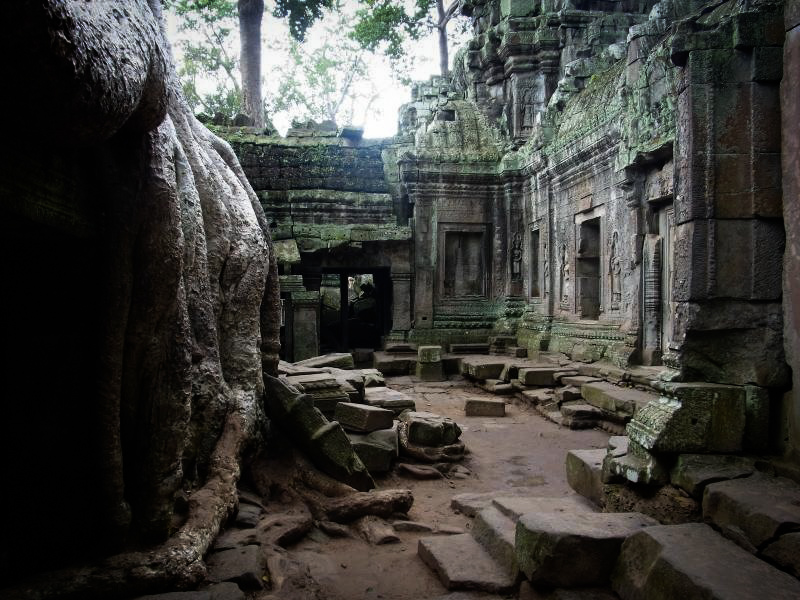
6 Countries I’d Recommend for First-Time Backpackers and Solo Travelers Abroad
Recently I’ve been asked more and more, “Where should I go for my first backpacking trip abroad?” So I decided to put together my recommended countries in this entry. Here I wrote about Thailand, Cambodia, Malaysia, Nepal, India and Egypt.
11. When You Get Sick or Run Into Trouble
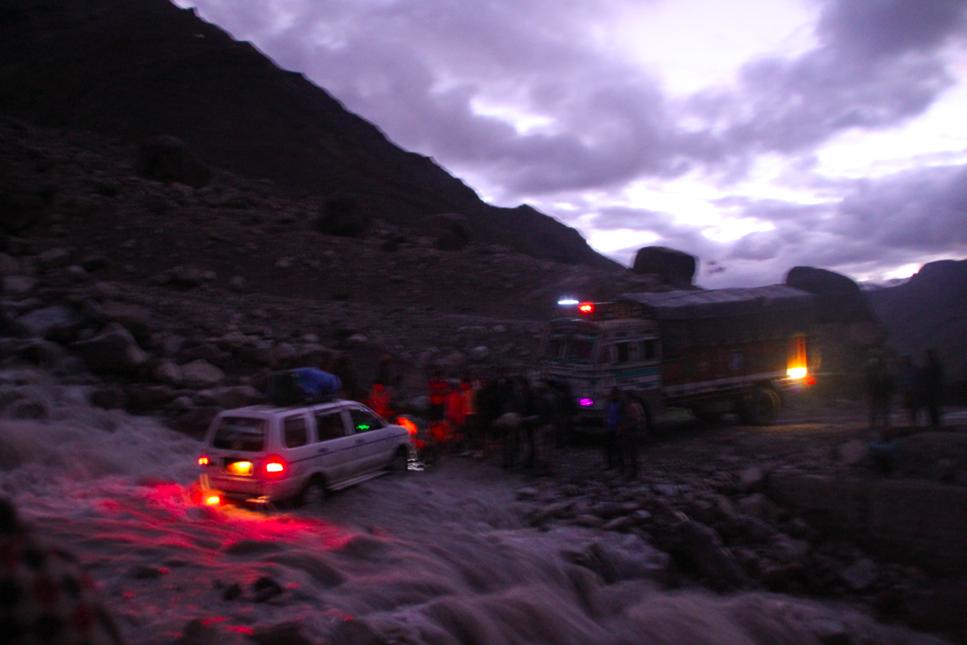
I Wrote About the Trouble You Can Run Into Abroad and How to Deal With It.
Trouble is part of traveling abroad, and things you never imagined can really happen. For example, trains get delayed, you get pickpocketed on the street, someone throws ketchup at you, or you get sick.
Trouble is part of travel. Things you’d never imagine in Japan really do happen. Because you’re in an unfamiliar environment, quite a few people get sick. In the entry above I described in detail the trouble that can happen when traveling abroad and how to deal with it. For vaccinations, see here.
To repeat what I wrote in that entry, if you fall ill and feel even slightly that something is wrong, it’s important to go to a local hospital. You never know what infectious disease you might catch abroad. Abroad you inevitably feel bolder, but when it comes to illness you have to deal with it seriously. Last year, in fact, a Japanese couple died of malaria while traveling.
Also, if something is stolen, contact your insurance company. Rather than making an international call, I recommend going to an internet cafe and calling via Skype or Google Voice. That’s another reason to carry copies of your credit cards, passport and emergency contacts; they’ll save you when you need them. Preventing trouble is important, but so is how you deal with it when it actually happens. If you’re truly at a loss, I think the best thing is to walk into the local embassy.
That’s it: I wrote this for people who want to travel abroad solo or go backpacking. It got long, but I’d be happy if it helps even a little anyone who wants to try solo travel or backpacking. Someone once said that going abroad frees your values, and I think that’s exactly right. My own first time abroad was at the end of my second year of university, and my first solo trip was in the summer vacation of my third year. I still think I should have gone traveling sooner.
These days young people are said to be inward-looking, but I think they simply don’t know how to go about it, or are made to feel that the hurdle is high. Once you’ve gone, you wonder why you didn’t go sooner.
I’m not trying to say, “Traveling leads to growth and change, so let’s go!” I wrote this entry simply because it’s so much fun and I want many people to have this experience. On a solo trip, fun things, surprising things, and unpleasant things all happen. I hope you’ll enjoy all of it, trouble included. Guidebook in hand, just take the leap.
If you have any questions or topics you’d like me to write about, I’d be glad if you contacted me on Facebook or Twitter. I’ll keep adding to this as I go. And if you liked it, I’d be happy if you shared it!
▼ Must-read entries for people who want to travel!
6 Things About Credit Cards You Should Know Before Traveling Abroad
The credit card you choose can change your trip quite a lot.
What I Felt and Want to Share After Finishing About 7 Months Around the World
My round-the-world story. It’s been five months since I got back to Japan. I’m doing pretty well.
For Anyone Who Wants to Hitchhike: A Roundup of Hitchhiking Tips and Techniques
I wrote this quite seriously. If you want to try hitchhiking, please give it a read.
.